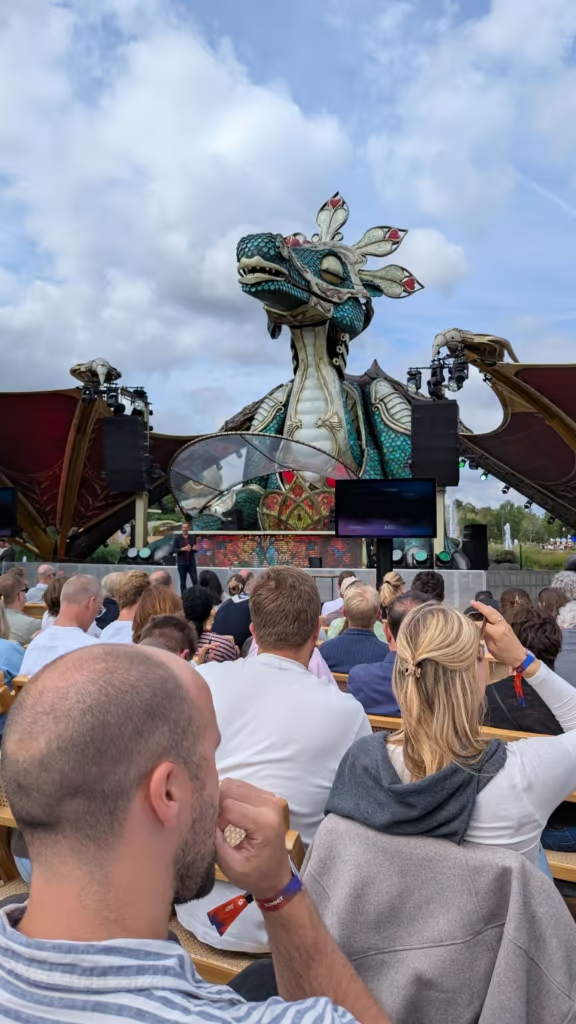
Love Tomorrow is the business and innovation event in Belgium that runs alongside Tomorrowland, and thanks to an invitation from De Tijd, I spent a day there. The program started early: a morning session of breath therapy, followed by a networking lunch. Not the usual way to open a business event, but it worked quite well for me. It felt like everyone woke up from a quick powernap and arrived at the lunch tables noticeably more relaxed than at the average conference coffee corner queue.
This article is a recap of how a digital studio experienced the Love Tomorrow Festival in Belgium.
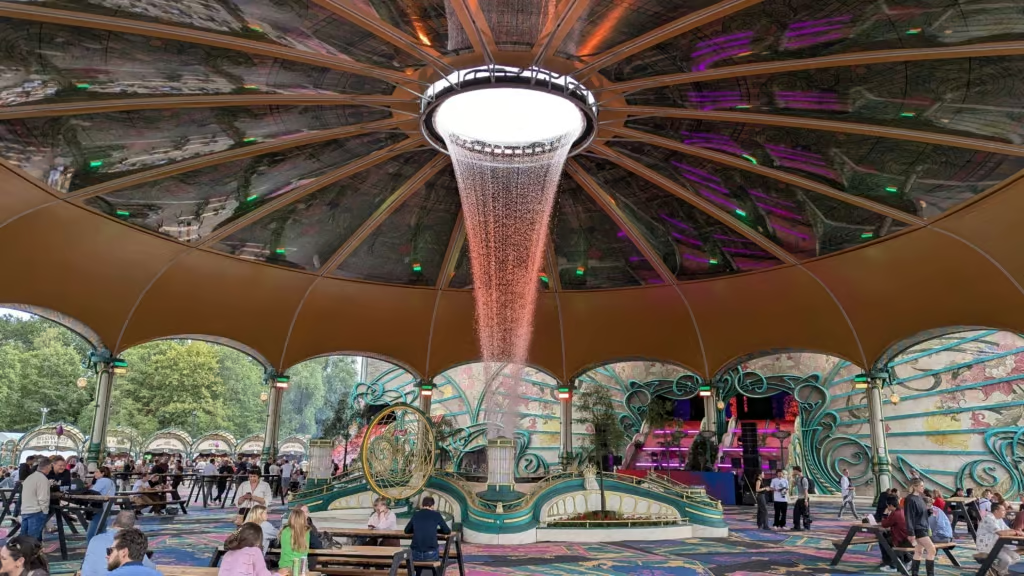
The Fairytale Setting
You cannot talk about Love Tomorrow without talking about where it takes place. Walking between the stage decorations of Tomorrowland is a reminder of what production at scale actually looks like: enormous structures, built with precision, designed to hold up under the weight of hundreds of thousands of visitors.
It was interesting to see the Tomorrowland area filled with people dressed for business instead of half the clothes when they are dressed to party. Some areas are closed off during Love Tomorrow so I could not discover the full experience, but it was still amazing to see.
Love Tomorrow also has a lot of privetazed business events, like the one I had with De Tijd. Making quite a few stages not accessible unless you got a specific invite.
My Honest Observation
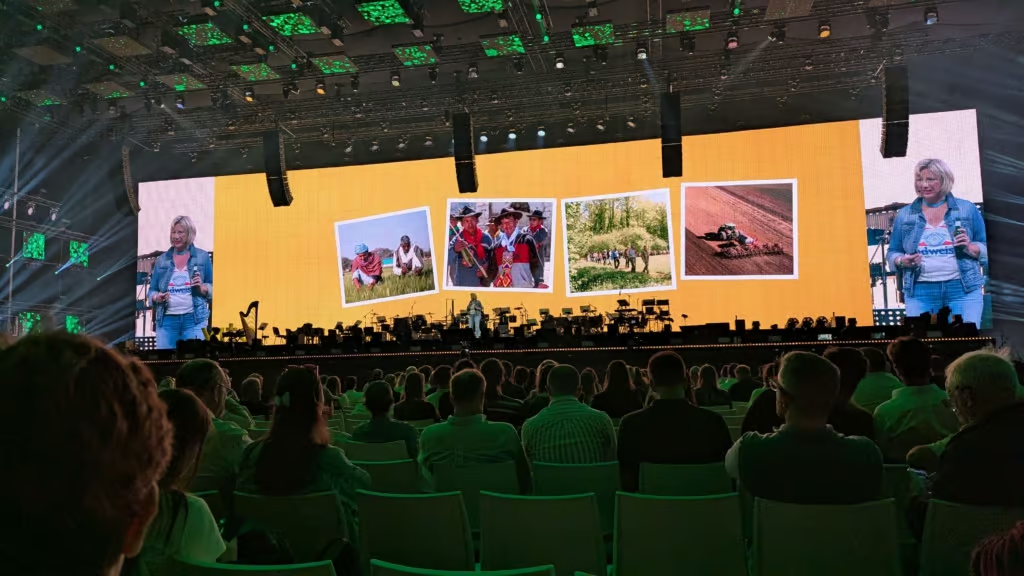
AI was well represented, but the demos on stage stayed close to the mainstream: the kind of use cases and AI discussions we’ve already seen. That is a fair choice for a broad audience, so I’m not complaining. It is just not where the interesting problems for Weichie live right now.
Personal Conversations
Therefore, the stages were not the point of the day for me. The people who were attending are.
I spoke with a founder who built an AI plugin that reduces token usage by almost 80 percent. That number matters more than it sounds: token consumption is the variable that makes AI costs hard to predict, and cutting it that far opens the door to offering customers a fixed AI cost inside our Weichie WOS application.
I also sat down with someone from the IT department of Police Zone Antwerp to talk about Aidan, our Digitale Wijkagent application. Rolling out a digital neighborhood officer for Politiezone Rivierenland taught us a lot about what police zones actually need, and comparing notes with another zone sharpens that picture further.
Another conversation took me into the health sector, exploring where the struggles overlap with policing: citizens who need a low-threshold way to reach an organization, teams that cannot scale their availability, and questions that arrive at all hours. The context differs. The underlying problem does not, and that is exactly the territory where a system like Aidan becomes relevant beyond its original sector. Not only public facing, but also assisting from the inside.
What I take home from Love Tomorrow
Love Tomorrow may be broader than our usual event diet, but it does have one advantage: you meet people you would never cross at a niche AI conference. A founder or CEO that is not a SaaS founder, a police officer, and a problem-solving conversation related to the health sector in one afternoon is not bad.
If any of these conversations sound like one you want to have with us, about AI costs, about Aidan, or about the infrastructure underneath your own operation: Please feel free to reach out to me! Always open for a quick conversation.